A
Brief Timeline of Yoga Practices and Concepts About 3500 bce (before the current era) for the first time we find the term yoga in the Rig Veda related generally to any practice of discipline. In the Atharva Veda, yoga is related to the pranayama practiced by priestly troubadours about 1000 bce. About 800 bce we see yoga appear in the sacred Upanishads re About 800 bce we see yoga appear in the sacred Upanishads referring to union with the Universal Absolute (Brahman) through karma yoga and jnana yoga. About 300 bce the Maitri (or Maitrayani) Upanishad gives the first fully developed system of yoga. The author of the Maitri Upanishad defines six limbs of yoga (sadanga) as control of the breath (pranayama), withdrawal of the senses (pratyahara), meditation (dhyana), concentration (dharana), contemplation (tarka) and absorption (samadhi). This Upanishad goes on to describe liberation (kaivalya) as the restraint of thoughts and absorption in self-luminous witness consciousness. These are all the core concepts and practices that we see in the Yoga Sutras. Within 200 years of the beginning of the current era Patanjali wrote his classic Yoga Sutras. This work is a substantial expansion on the Maitri Upanishad. To the Maitri sadanga are added restraints (yama), observances (niyama) and posture (asana). Tarka is dropped from the set giving us eight limbs (astanga); which we see today after being refreshed in the last century into a vinyasa form of hatha yoga. For a very long time this eight-limb Raja Yoga was the middle of the road of yoga philosophy and practice. In the ninth or tenth century, Goraknath gave us the Siddha Siddhanta Paddhati, the first publication specific to hatha yoga and tantra. In the fourteenth century Svatmarama produced Hatha Yoga Pradipika, a tantric text describing sixteen asanas; variants of Padmasana. Note that these are all seated postures, specifically for pranayama and meditation, for attainment of samadhi. At the time, tantra and hatha yoga were thought radical and misguided. Note that it is 1,500 years after Patanjali that yoga begins to be associated with asana.
A
Yes it exists but mind is an ego and so it always projects an illusion.
Mind can never find the absolute. It tries to find it but always fails.
Mind creates an illusionary personal self and person suffers whole life believing that there is a person ‘ i’ who has lot of problems in life .
A
GO QUINOA
Brown and white rice can both cause blood sugar fluctuations, with instances where brown rice may lead to more significant fluctuations than white rice.
A
Prakriti is the matter which makes up the field, while purusha is the formless thread of the soul’s energy. Together these two weave to make the quilt of life, with “prakriti the agent, cause and effect of every action,” and “purusha that seems to experience pleasure and pain.” Prakriti also bears out the gunas of tamas, raajas and saatvas, and a person’s response to these gunas ensures whether they will be tied to good or evil.
A
TO HEAL WITH GOLD
Kintsugi
It’s at moments of disillusion that we might turn our minds to a concept drawn from Japanese philosophy, and in particular, from the Zen Buddhist approach to ceramics. Over the centuries, Zen masters developed an argument that pots that had become damaged shouldn’t simply be neglected or thrown away. The word given to this tradition of ceramic repair is kintsugi: |
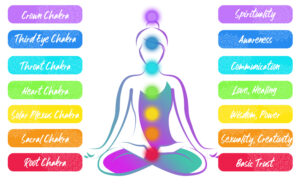
Kin = golden A  A ADVTA Science tells us about particles, waves, energy, but misses the point. The Big Bang? A spectacular illusion. This isn't about particles colliding; it's about understanding Maya, the grand illusion. In radical non-dualism, the separation between you, me, and the cosmos is just that – an illusion. The energy of the Big Bang didn't 'come from' anywhere because in the realm of non-dualism, there's no 'from', no 'to'… …just an endless dance of existence. A The ego loves puzzles, mysteries, origins. It thrives on the chase. But here's the twist: to truly grasp the Big Bang's energy source, you must shatter the ego. This is not for the faint-hearted. It's about deep shadow work, confronting the darkest corners of your psyche, and realizing that you are not separate from the universe; you are the universe. The energy of the Big Bang is the same energy that fuels your deepest thoughts, your wildest dreams. It's a journey of self-realization… …a path to understanding that everything you see is a reflection of your inner self. A “As you become absorbed in meditation, you will realize that the Self is separate from the body and for this reason will not be affected by disease, old age, or death.” A “Give me solitude,” Whitman demanded in his ode to the eternal tension between city and soul, “give me again O Nature your primal sanities!” In those primal sanities, we come to discover that “there is no place more intimate than the spirit alone,” as May Sarton wrote in her stunning 1938 ode to solitude — her hard-earned testimony to solitude as the seedbed of self-discovery, for it is in that intimate place that we see most clearly what our animating spirit is made of. Solitude, Kahlil Gibran knew, summons of us the courage to know ourselves. Elizabeth Bishop believed — a belief I can attest to with my own life — that everyone must experience at least one long period of solitude in life in order to know what we are made of and what we can make of our gifts. “There is only one solitude, and it is large and not easy to bear,” Rilke wrote in contemplating the relationship between solitude, love, and creativity, “but… we must hold ourselves to the difficult.” A Like the 7 chakras on our body, there are Earth chakras that awaken us. When you visit them, you can feel moved. Find out where they are!
|

A
Finally, we venture beyond the confines of time and space.
Imagine a state where past, present, and future merge into one. This is the domain of radical non-dualism, where the concept of a 'Big Bang' loses its meaning.
Here, the energy of creation is not an event from the past; it's an ongoing reality, constantly unfolding within and around us. This is the ultimate awakening, realizing that you are not a spectator of the universe; you are its creator, its observer, and its creation…
…all at once.
Big Bang Within: Harnessing Your Inner Cosmic Power
A
So, where did the energy of the Big Bang come from?
It's been within you all along. The real quest is not to find an external source but to recognize and harness the boundless energy within yourself.
This journey transcends the realms of science and enters the mystical, where every moment is a Big Bang, every thought a creation, every breath a universe in itself. The path to this realization is not easy, but it's the most rewarding journey you'll ever embark upon. In summary, the Big Bang's energy didn't just appear out of nowhere. It's a part of the grand illusion, a dance of existence that you're an integral part of.
Shatter your ego, dive deep into your consciousness, and you'll find that you're not just in the universe; you are the universe. Embrace this truth, and you'll unlock a power beyond imagination – the power to create, to understand, to be.
Welcome to the grand opening act of your own cosmic journey.
A
Stevia enhances insulin secretion and activity while diminishing insulin resistance
A

A

No comments:
Post a Comment