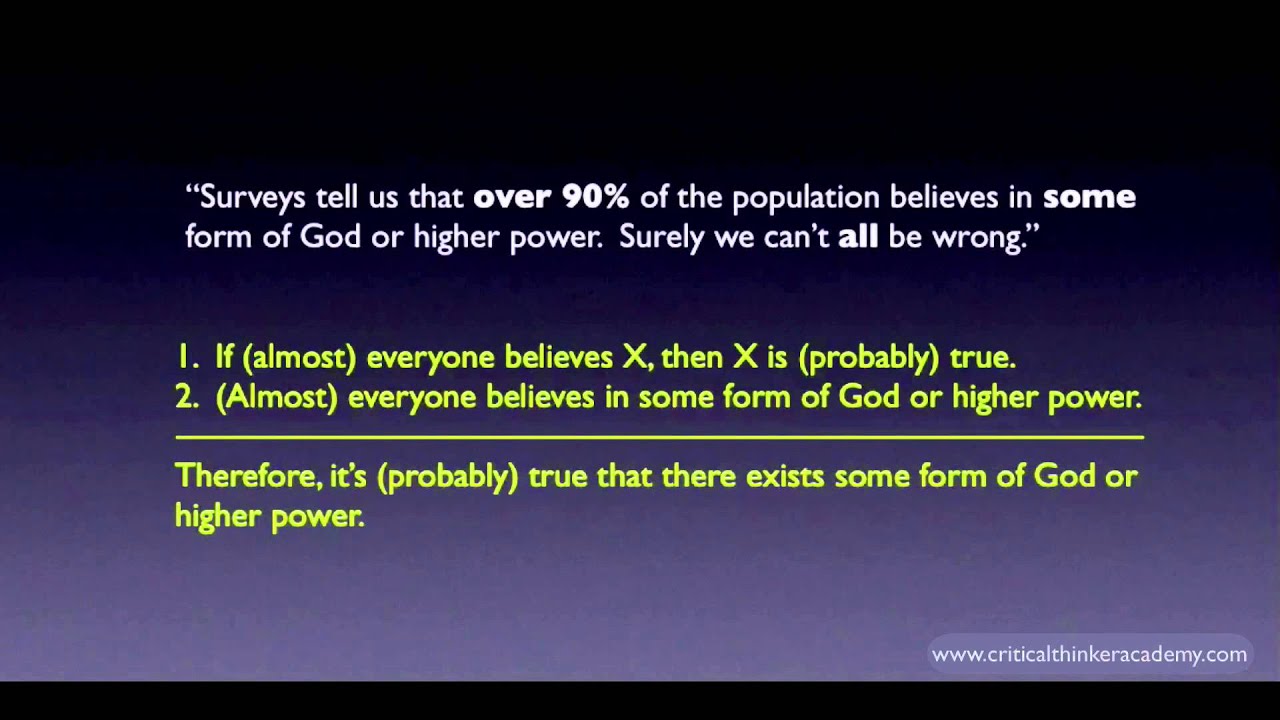
THE MISCONCEPTION: The larger the consensus, the more likely it is correct. THE TRUTH: A belief is not more likely to be accurate just because many people share it.
When it comes to the common belief fallacy in your own life, remember that scientists are always trying to reach better conclusions, and that is something you don’t do as an individual, at least not by default, and by extension it is something your institutions are not so great at either. You don’t seek out what science calls the null hypothesis. That is, when you believe in something, you rarely seek out evidence to the contrary to see how it matches up with your assumptions. That’s the source of urban legends, folklore, superstitions, and all the rest. Skepticism is not your strong suit. Corporations and other institutions rarely set aside a division tasked with paying attention to the faults of the agency. Unlike in science, most human endeavors leave out a special department devoted to looking for the worst in the operation—not just a complaint department, but a department that asks if the organization is on the right path. Every human effort should systematically pause and ask if it is currently mistaken. To be less dumb, you need that department constantly operating in your cranium. You would do well to borrow from the lessons of the scientific method and apply them in your personal life. In the background, while you crochet and golf and browse cat videos, science is fighting against your stupidity. No other human enterprise is fighting as hard, or at least not fighting and winning

No comments:
Post a Comment